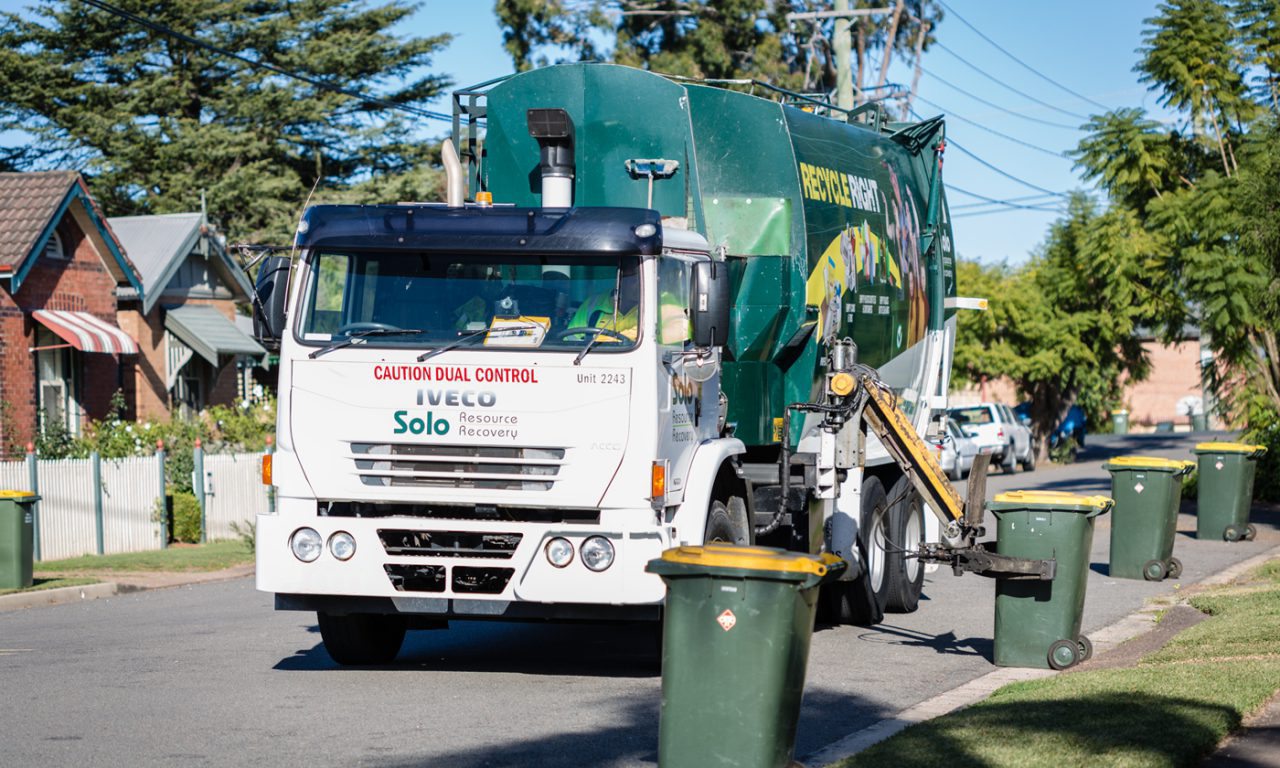
School Case Study / Waste Management
Take a look at what Hunter Resource Recovery and our local Hunter schools have been working on together to create a more greener, and recycling-friendly environment.
SCHOOL CASE STUDY
East Maitland Public School – A Waste Wise School
East Maitland Public School is currently involved in Hunter Resource Recovery’s school’s recycling program. With 730 students you can imagine how much waste and recyclable material the school produces.
The school fills eight 240 litre recycling bins with cardboard and paper each fortnight. Each classroom has a small recycling bin in which all used paper and cardboard is collected. Class monitors ensure that all this material is emptied into the HRR recycling bins that are distributed throughout the school. Staff from the canteen, the main office and the staff room also recycle all of their used cardboard and paper.
The school’s strong environmental commitment has not only helped to save precious resources going to landfill and being wasted, but it has also been able to save the school money. It is estimated that since the introduction of the recycling service an estimated $1200 has been saved in waste disposal costs!
East Maitland Public School not only recycles paper and cardboard, but also recycles aluminium cans. The school has found that by selling the cans it can also make money that will ultimately benefit the students. The cans are sold to a local scrap metal merchant and the money raised is used for auction items for student life skills.
Another part of the school’s waste management strategy is the use of compost bins. The students helped design and build 2 wooden compost bins. These are fed regularly by the students with lunch scraps that are collected in each classroom, and with kitchen waste from the canteen. Garden waste from the school grounds is also composted in the same manner. The students are currently designing a worm farm too, which will compliment the use of the compost bins.
In 1999, East Maitland Public School was awarded the School’s Environment Award by Maitland City Council. This award recognises that the school has been able to save the Earth’s resources, and money, by managing its waste. By doing so, the school has also taught the students that each person must take responsibility for their actions and that without too much effort everyone can learn to avoid, reduce and recycle waste.
WASTE MANAGEMENT IN SCHOOLS
All Saints College – St Peter’s Campus
Implementation of Waste Stations in the Playground.
The School
All Saints College is a Catholic, co-educational college conducted under the auspices of the Catholic Schools Officer, Diocese of Maitland-Newcastle. All Saints College comprises three Campuses: St Mary’s, St Peter’s and St Joseph’s. St Mary’s caters for students in Years 11 – 12 and St Peter’s and St Joseph’s cater for students in Years 7 – 10. St Peter’s Campus is located in central Maitland and is currently attended by around 850 students.
What did the school do?
Students and teachers of the Student Representative Council (SRC) work on many projects and one project they saw necessary was to look at how the school was disposing of its waste.
In 2006 the school began a process of composting paper and food scraps but found the volume of materials being generated to be too much to continue with this process.
The SRC and teachers then investigated other ecologically sustainable and socially responsible ways to deal with waste being generated in the school to ensure it was not all sent to landfill.
Teachers representing the SRC met Hunter Resource Recovery and Maitland City Council to look at what services were available in relation to waste and what could be achieved in the playground to reduce the current waste being sent to landfill.
The concept was then born to look at replacing the existing general waste garbage bins in the playground with waste stations that contained a bin for general waste, a bin for recyclables, and a bin for food waste.
Students already had some knowledge in this area as most live in Maitland suburbs serviced by the fortnightly kerbside residential recycling service.
What is Being Achieved?
The school has established twelve waste stations throughout the playground each containing a recycling, general waste and food waste bin with additional general waste bins also located throughout the playground. Signage has been placed on the outside of all bins to ensure students can identify the general waste, food waste and recycling bins to ensure waste is separated appropriately.
In establishing the waste stations, the school has removed fourteen general waste bins which were previously located throughout the playground to encourage students and teachers to use the different waste collection options rather than continuing to place all waste in the general waste to landfill stream.
The school saw it important to have openings in the top of all of the bins to ensure students did not have to open bins to use them.
In the first month of waste stations being positioned around the playground approximately 216kg of material was collected for recycling thus diverting this material from landfill. Over a school year it is estimated that around 2.4 tonnes of material will be recycled. Each fortnight the recycling bins are full for collection. It is noted, that the general waste bins are not being used as much anymore with students taking the initiative and separating their waste into the different streams.
Food continues to account for in excess of 80 kilograms of material per week. This is fed to the chooks housed at the school and composted using the schools compost area.
In addition to the reduction in waste going to landfill there has been a considerable drop in the amount of litter being found around the playground. It appears that students are more responsible in ensuring that their waste is placed in the appropriate bin and not dropped on the ground for it to blow around the schools playground.
Teachers issue Merit Certificates to students observed to be using the bins appropriately and providing assistance to other students to ensure that the correct bin is used for the disposal of waste.
When students are asked to pick up rubbish, it is no longer a chore but a challenge for them to determine what is recyclable, what is compostable and what is waste.
Teachers report minimal contamination in the three bin types with the main items requiring reinforcement of the correct bin for disposal being glad wrap, straws and chip packets. Students are encouraged to dispose of their waste appropriately through recognition of their efforts. Student notices and tutor group are used to reinforce the correct waste disposal patterns and to recognise the positive contributions students are having in reducing the amount of waste being sent to landfill.
The use of different areas of the school by students due to weather has seen the need for the school to consider the location of the waste stations regularly. In periods of warm weather and rainfall students congregate in different areas of the playground so it has been important for the bins to be moved to areas of congregation to ensure they are used effectively.
One of the unexpected benefits of the program has been that students are taking the recycling and composting message home and educating their families on what can be recycled and composted instead of being placed in the general waste stream and being sent to landfill.

